
Software built for marine service pros.
The customer isn't the account — it's the hull. Boats change hands, owners keep two, and the record that matters is the one attached to the vessel.
Per-vessel history, seasonal checklists and installs billed to the hull.
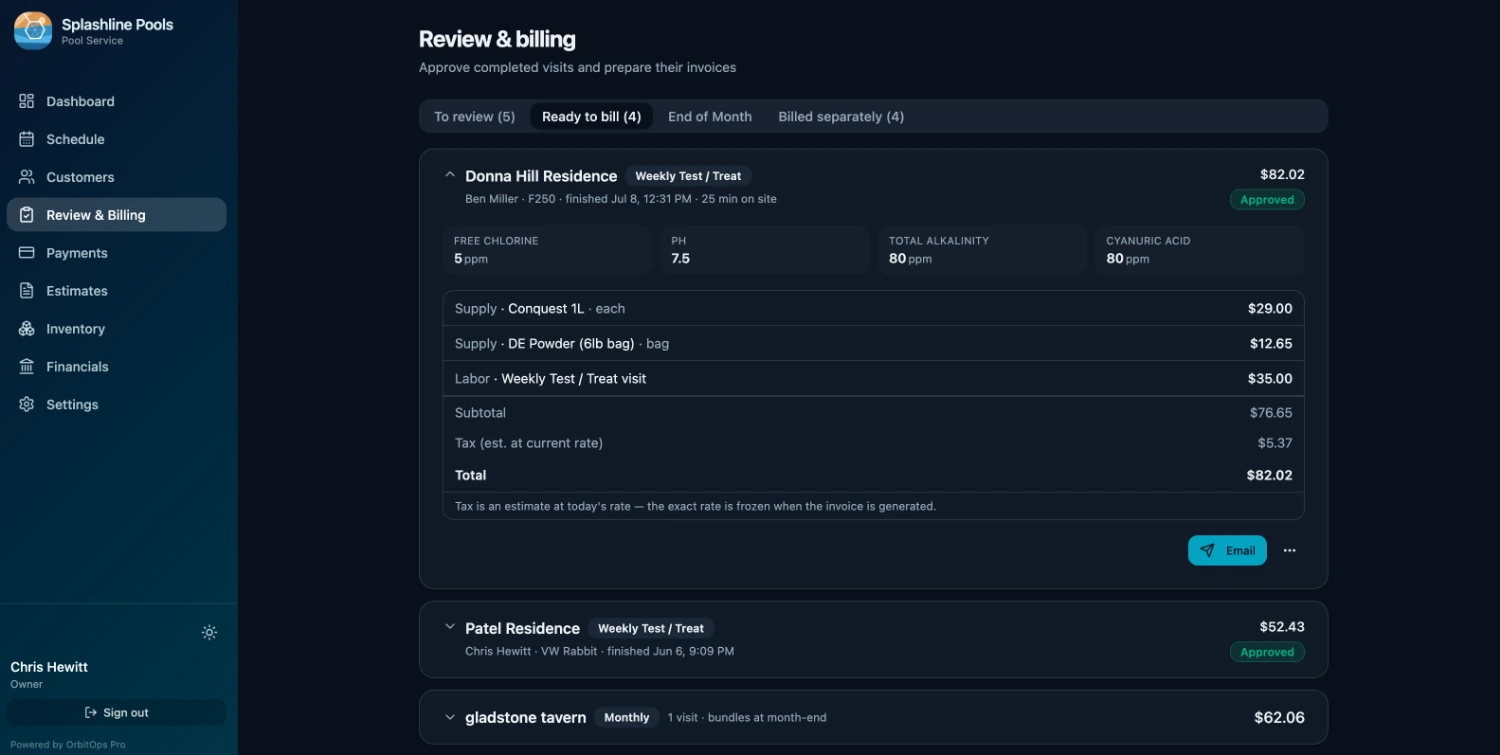
Marine service is a mobile trade with a memory problem. You are at a different marina every day, half your work is seasonal and comes back around once a year, and the thing you actually need history on is a boat that may have changed owners since you last touched it.
OrbitOps Pro attaches the record to the vessel. Winterization and spring commissioning arrive as built checklists, installs quote and schedule as one job, and the electronics you fit are billed to the hull that got them.
Every vessel keeps its own file
An owner with a center console and a cruiser is two boats, two engine hours, two winterization histories — and one very annoyed customer if you confuse them.
The boat is the record
Each vessel sits under the customer with its name as the identifier, so the history follows the hull rather than the person who happens to own it this season.
Electronics with serials and warranties
The chartplotter you fitted last spring is recorded against that vessel with its serial number and warranty date. When it fails in year two, the claim is a lookup.
A history you can hand over
Every visit, part and install stays on the vessel permanently, and can be produced as a service record on request — which is the document that makes a resale conversation short.
Nobody rewrites the log
Once something is logged against a vessel, nobody can edit or delete it — not the office, not the tech, not us. A correction is added as a new entry, so the record only ever reads forward. That is what makes the history worth handing to somebody who is relying on it.
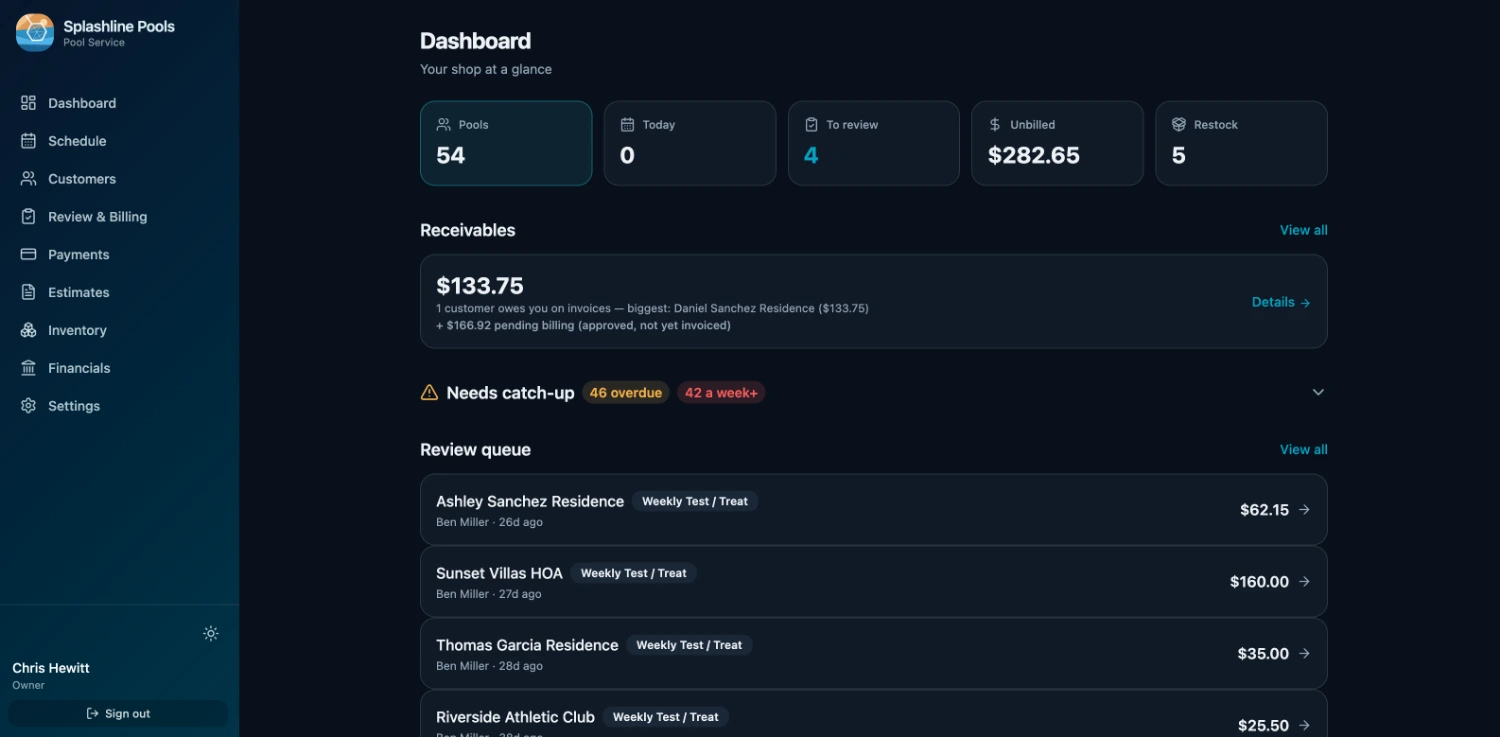
Per-vessel records come in on Executive. Because invoice lines are tagged to the unit, an owner with more than one boat gets a bill that breaks down per hull.
One boat, three seasons, one record
Haul-out, storage, splash. The same vessels come back around every year, and the work is detailed enough that "we did it the usual way" is not a record of anything.
Winterize, step by step
Drain the water systems, run antifreeze through them, fog the engine, stabilise the fuel, disconnect and store the batteries, cover or shrink-wrap. The checklist is built in, and ticking it off becomes the record of what was done to that hull.
Spring Service, step by step
De-winterize the engine and systems, reinstall and test the batteries, check fluids and filters, test the pumps, electronics and lights. The tech who splashes the boat may not be the one who wrapped it — the checklist closes that gap.
What the haul-out turns up
A winterization that finds a cracked impeller housing becomes a quote against that vessel. On Executive and Premier, approval turns it into scheduled work with its parts list — booked for the off-season, when you have the time.
Last year, on the same boat
Because the history sits on the vessel, this year's winterization opens with what you found last year already visible. Recurring seasonal work stops starting from zero.
Quote it, schedule it, bill it as one job
An electronics install is the highest-value work in the trade and the easiest to lose money on — because the quote, the parts order and the invoice usually live in three different places.
Quoted against the boat
The quote is attached to the vessel, not just the customer, so what you priced and what you are fitting it to stay connected.
Approved becomes scheduled
Once the owner approves, the quote becomes an Install job carrying its parts list — review the plan and parts, mount and fit the equipment, wire, plumb and connect, test operation, clean up.
Fitted becomes billed
Every unit and length of cable the tech logs becomes an invoice line against that vessel and draws down from truck or shelf stock with its cost attached. The bill of materials matches what actually went into the boat.
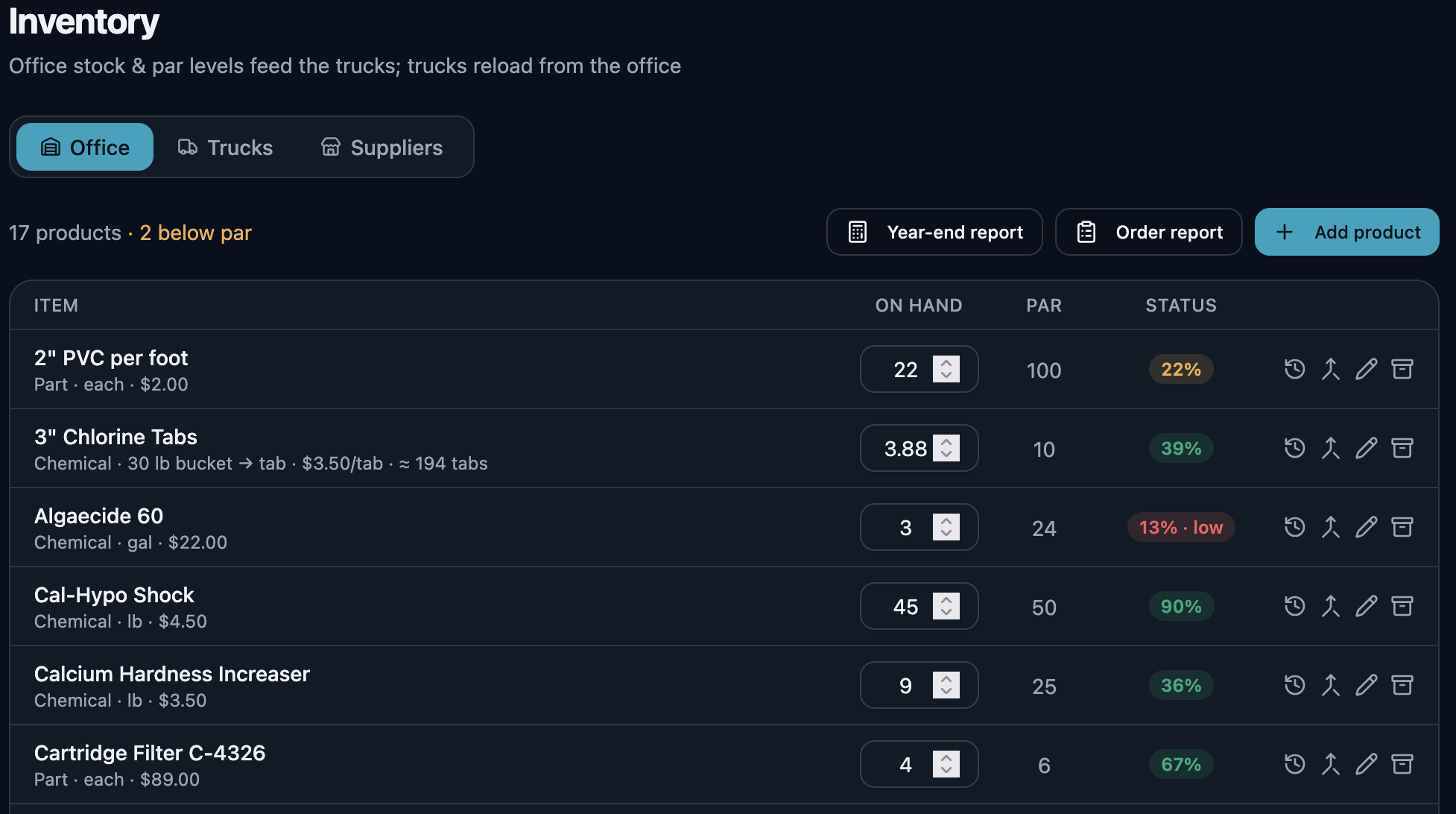
Estimates, inventory and purchase orders all come in on Executive. On Premier, the money-recovery reports surface the installs you quoted and never closed.
You work at the slip, not at a desk
Marine techs spend the day between marinas with their hands full. Anything that needs a laptop and a quiet moment does not get done.
The day, on the phone
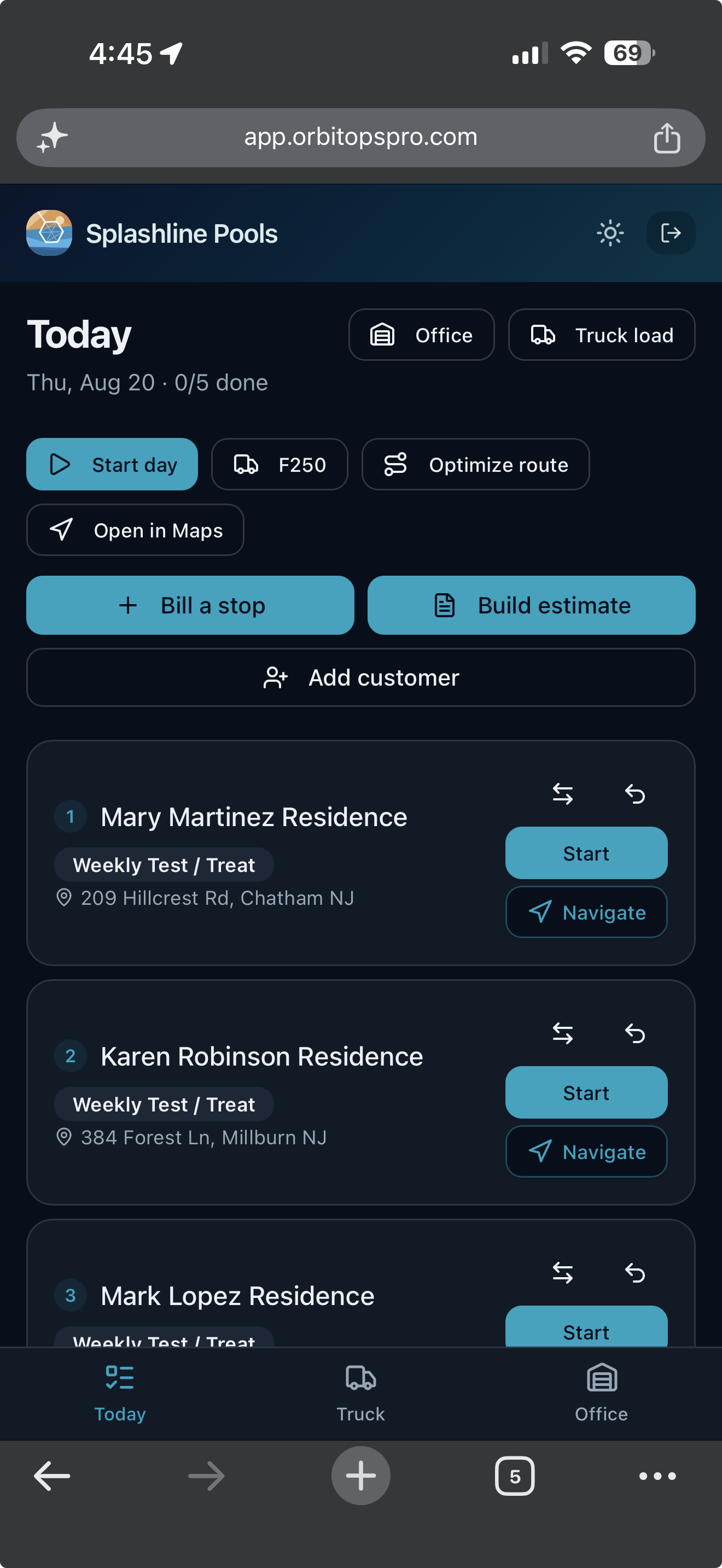
Techs open the day's jobs, work the checklist and log parts from the dock. The visit closes where the work happened.
The week on paper, before the signal drops
Save offline copy turns the week into a PDF: every scheduled job, who it is assigned to, and the contact details for the customers on it. If the marina has no signal, the day still runs off the copy you already saved.
One marina at a time
Cluster the day's jobs by location so a tech clears a marina before moving on — on every plan. On Executive and Premier, route optimization sequences and maps the route between them.
Confirm before you drive
Appointment confirmation is on for marine on every plan — worth having when the owner needs to meet you at the boat and the next marina is forty minutes away.
Paid from the dock
Send a pay link as the job closes; the owner settles by card on Stripe's hosted checkout and the funds land in your own Stripe account. Cash and checks get recorded against the same invoice.
Per job, or a month at a time
A haul-out or an install bills as its own job when it closes. Recurring dock work — a weekly rinse and dry, say — can compile into one monthly invoice instead of a slip of paper every week. Each customer has their own default, set on their record, so the choice is made once for that customer instead of job by job.
The day arrives on the phone, already in order
The office builds the week. The tech opens one screen and works down it — and everything recorded on the way is what the invoice gets built from.
Open it and work down the list
Today opens on the stops in order, each with the customer, the visit type and the address, and a count of how many are done. One tap starts a stop, one opens it in Maps. Nobody is calling the office to ask what is next.
What they record is what you bill
Materials, readings and notes are captured at the stop while the tech is standing in it. The visit record is the billing record, so the invoice is built from what happened rather than reconstructed on Friday.
Billing and quoting from the driveway
A tech you trust can bill a stop as they finish it, and build an estimate while they are standing in front of the work. What they bill in the field is past the month-end sweep’s reach, so the same visit cannot also land on that customer’s monthly bill. The billing grant is per tech and yours to give; estimates come in on Executive.
What marine techs ask us
Does each boat get its own record?
Yes, on Executive and Premier. A vessel is its own record under the customer, with its name as the identifier. Work is billed against that vessel, installed electronics and parts carry their serial numbers and warranty dates, and the service history stays permanent — so an owner with three boats gets three histories, not one pile of notes.
Does it handle winterization and spring commissioning?
Yes, as their own visit types with built checklists. Winterize covers draining the water systems, running antifreeze through them, fogging the engine, stabilising the fuel, disconnecting and storing the batteries, and covering or shrink-wrapping. Spring Service covers de-winterizing the engine and systems, reinstalling and testing the batteries, checking fluids and filters, and testing pumps, electronics and lights.
Can I quote an electronics install and turn it into a job?
Yes, on Executive and Premier. Quote the install against the specific vessel, send it for approval, and the approved quote becomes a scheduled Install job carrying its parts list. The Install checklist walks the tech through reviewing the plan and parts, mounting the equipment, wiring, plumbing and connecting it, testing operation and cleaning up.
Will the parts and electronics I fit get billed?
On Executive and Premier. The tech logs what went into the boat as they work; each item becomes an invoice line against that vessel and draws down from truck or shelf stock with its cost attached. Because lines are tagged to the unit, an owner with more than one boat gets a bill that breaks down per hull.
I work from a truck across several marinas. Does that work?
Yes. Techs run the day from their phone at the slip. You can cluster the day's jobs by location on any plan so one marina is worked through at a time; on Executive and Premier, route optimization sequences the day and maps it. Appointment confirmation is available on every plan, which matters when the owner has to meet you at the boat.
Can I show an owner everything done to their boat?
Yes. The vessel's service history is permanent and can be produced as a record on request — every visit, part and install against that hull. It is the document that makes a resale conversation short.
Your customers didn't sign up for our software — you did. Their names, addresses and phone numbers stay in your account. Your books get a month of totals rather than your client list, and our own support console can't display who they are.
What leaves your account →Run your marine services business, not your software.
Create your account and get set up in your trade. Scheduling, invoicing and card payments are included in every plan.
Questions first? Talk to us.
Email support@orbitopspro.com to chat with us.